
Capcom’s latest financial update delivered a clear message to the market, the company’s long-running franchises are still doing heavy lifting, and the pipeline into early 2026 is giving investors plenty to price in. On January 28, 2026, Capcom shares jumped sharply in Tokyo trading after the publisher posted strong nine-month results and reiterated its full-year outlook for the fiscal year ending March 31, 2026.
For the nine months ended December 31, 2025, Capcom reported net sales of 115.315 billion yen, up 29.8% year over year. Operating profit climbed even faster, rising 75.1% to 54.302 billion yen. Ordinary profit increased 64.6% to 51.703 billion yen, while profit attributable to owners of the parent rose 68.6% to 38.885 billion yen. In plain terms, revenue growth was strong, and profitability expanded even more, a pattern that typically reflects a favorable mix of high-margin digital sales and a healthy contribution from older titles that cost far less to sell today than they did to build.
A major driver was the company’s core Digital Contents business, which covers its console and PC games, along with related digital activity. Capcom said it continued pushing investments aimed at expanding global digital sales, and it leaned on a familiar playbook: broaden the audience on new hardware, keep older games visible through ongoing storefront strategy, and sustain franchise attention through coordinated marketing beats.
That approach showed up in the unit numbers. Capcom said its Digital Contents business sold 247 titles across 238 countries and regions during the nine-month period. Total unit sales reached 34.64 million units, up from 30.53 million units a year earlier. Crucially, the company also emphasized the performance of catalog titles, the older releases that typically generate strong margins. Catalog unit sales reached 33.39 million units, surpassing 28.61 million units in the comparable prior-year period. When a publisher is moving that many catalog units, it generally means discounts, platform promotions, and franchise visibility are converting into real volume at scale.
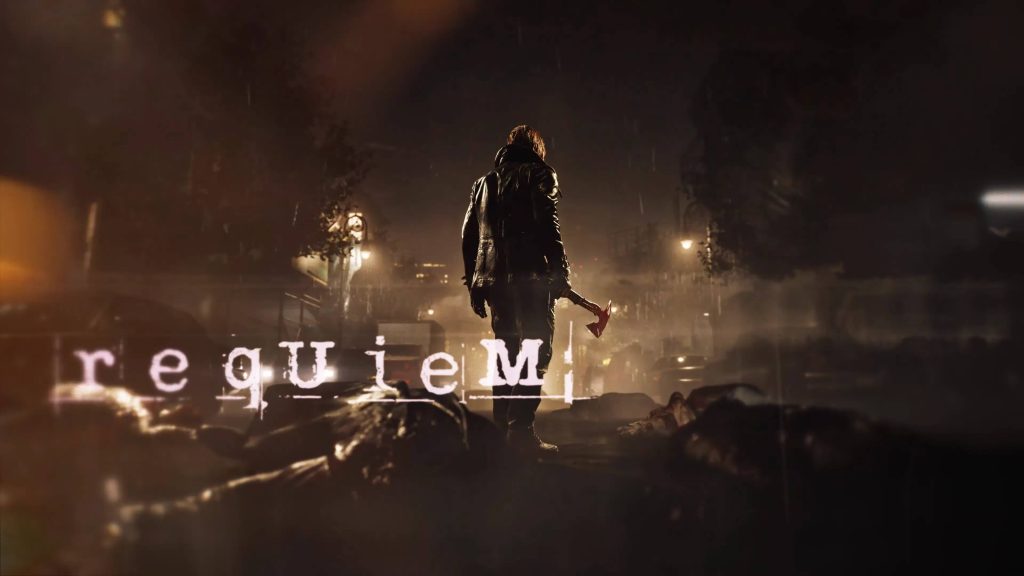
Capcom also pointed to a specific example of how franchise momentum can lift older titles: anticipation for the next mainline Resident Evil release. The company said excitement increased after the announcement of Resident Evil Requiem, and that anticipation helped drive sales growth for related games, led by Resident Evil 4 and Resident Evil Village. The Resident Evil series has become a reliable engine for Capcom over time, not only through new releases, but through the long tail of remakes, re-releases, and steady demand for prior entries.
The broader sales picture reinforces that point. Capcom’s own unit rankings for the period show multiple Resident Evil titles among the top sellers, alongside other franchise staples. This kind of spread matters, because it suggests performance is not dependent on a single breakout hit in a single quarter. Instead, the company is monetizing a portfolio of evergreen titles that can be promoted repeatedly across platforms and seasonal sales windows.
Street Fighter was another contributor. Capcom said Street Fighter 6 continued to support earnings, including via a Nintendo Switch 2 version released in June 2025 and continued esports initiatives. The company also noted that cumulative global sales of Street Fighter 6 surpassed 6 million units. Fighting games can be especially durable when supported well, because the community aspect, competitive play, and ongoing content cadence give players reasons to return.
Monster Hunter remains a pillar as well. Capcom said Monster Hunter Wilds surpassed 11 million units in cumulative sales. At the same time, Monster Hunter Rise and its Sunbreak expansion continued to add units, underscoring how a franchise can stack sales across multiple active entries when the audience is engaged. From an industry perspective, this is what publishers want, a release cadence where new games attract attention, but older games keep selling alongside them.
Capcom’s results were not limited to games. The company cited gains from efficiently operating existing locations and expanding formats in Arcade Operations, plus favorable sales of new and repeat smart pachislo machines in Amusement Equipments. It also described efforts to raise awareness of its intellectual properties through adaptations, esports, licensing, and events. Even if the core of the story is video games, that broader ecosystem can reinforce brand awareness and keep franchises in front of potential buyers.
Importantly, Capcom did not change its full-year forecast. The company said its projection for the fiscal year ending March 31, 2026 remains the same as what it set at its May 13, 2025 financial results announcement. That forecast calls for net sales of 190.0 billion yen, operating profit of 73.0 billion yen, and ordinary profit of 70.0 billion yen, with profit attributable to owners of the parent expected at 51.0 billion yen. The message embedded in the unchanged forecast is that Capcom believes it is on track, and the nine-month numbers help explain why.
Looking ahead, the release calendar is one reason investors are paying attention now. Capcom has Resident Evil Requiem scheduled to launch on February 27, 2026 across major platforms, including PlayStation 5, Xbox Series X|S, PC, and Nintendo Switch 2. The company’s own materials also list several additional releases in the weeks that follow, including Monster Hunter Stories 3: Twisted Reflection on March 13, 2026 and Mega Man Star Force Legacy Collection on March 27, 2026. Another notable upcoming title, PRAGMATA, is scheduled for April 24, 2026.
This matters because the market tends to reward publishers that can combine two strengths at once: reliable catalog performance today, and credible catalysts tomorrow. Capcom’s recent results emphasize the first half of that equation. The company is selling tens of millions of units largely through its back catalog, which can be especially lucrative in a digital-first environment. And the announced lineup for early 2026 provides the second half, a set of new releases that can refresh franchise attention, attract new players, and potentially extend the sales tail even further.
From a strategic standpoint, Capcom has spent years building a model where franchises operate like platforms. Remakes and updated releases bring older stories and mechanics to modern audiences, esports and community programming sustain engagement, and cross-media visibility can keep interest high between major launches. That does not guarantee every new release will be a blockbuster, but it does create resilience, especially when older titles continue to perform strongly across global storefronts.
For players, the takeaway is straightforward: Capcom is heading into 2026 with its biggest brands active, multiple releases on the calendar, and a clear emphasis on multi-platform reach. For the business, the recent numbers show how powerful that combination can be when executed well, and why the market reacted so quickly to the latest update.
News written by Mike.