
Gears of War: E-Day is shaping up as a deliberate return to the mood that defined the franchise’s earliest years, with its developers signaling a tighter, more personal approach to storytelling. The upcoming entry is framed as a prequel that revisits Emergence Day, the moment the series’ world changed overnight, and it puts two of the saga’s most recognizable soldiers—Marcus Fenix and Dominic “Dom” Santiago—back at the center of the action. The studio’s message is straightforward: this is meant to feel authentically like Gears again, while still benefiting from modern technology and production values.
Set well before the events of the original Gears of War, E-Day is positioned as an origin-driven story that explores what it means to face an unprecedented threat for the first time. Rather than treating the conflict as background lore, the prequel leans into the human side of a world thrown into chaos—how ordinary life collapses, how communities respond, and how quickly the familiar becomes unrecognizable. That framing matters because it naturally supports a more grounded tone: less about escalation for its own sake, and more about immediacy, uncertainty, and survival.
Gears of War: E-Day | Official Announce Trailer (In-Engine)
One of the clearest signs of that design philosophy is the game’s reported focus on a single primary location. Developers have described E-Day as taking place in the city of Kalona and unfolding across consecutive days, a structure intended to make the setting feel lived-in and emotionally readable rather than simply a backdrop for missions. A contained city environment also complements the franchise’s signature cover-based combat, allowing encounters to stay intense and deliberate without needing to stretch the experience across sprawling regions. The idea is to let players feel the stakes of a place changing in real time—streets, landmarks, and neighborhoods that start as recognizable quickly becoming scarred by the unfolding crisis.
That emphasis on tone is central to how E-Day is being discussed. The studio has repeatedly pointed to the “vibes” of the original games as a target—bringing back a heavier sense of tension, closer-quarters pressure, and an atmosphere that feels ominous without needing constant spectacle. In practice, that can translate into pacing that lingers where it matters: quiet moments before danger hits, tighter spaces that make movement and decision-making feel urgent, and a stronger sense that the enemy is something unknown rather than just another obstacle to clear.
At the heart of the prequel is the relationship between Marcus and Dom, with the developers suggesting the story is built to show the origins of their bond. Instead of relying on what longtime fans already know about them, E-Day is intended to explore who they were at the beginning of this chapter—how stress, responsibility, and shared experience shape them into the partnership the series became known for. The studio has even hinted that this could become one of the franchise’s most emotional narratives, using the early days of the catastrophe as a pressure cooker for loyalty, trust, and the kind of friendship forged under impossible circumstances.
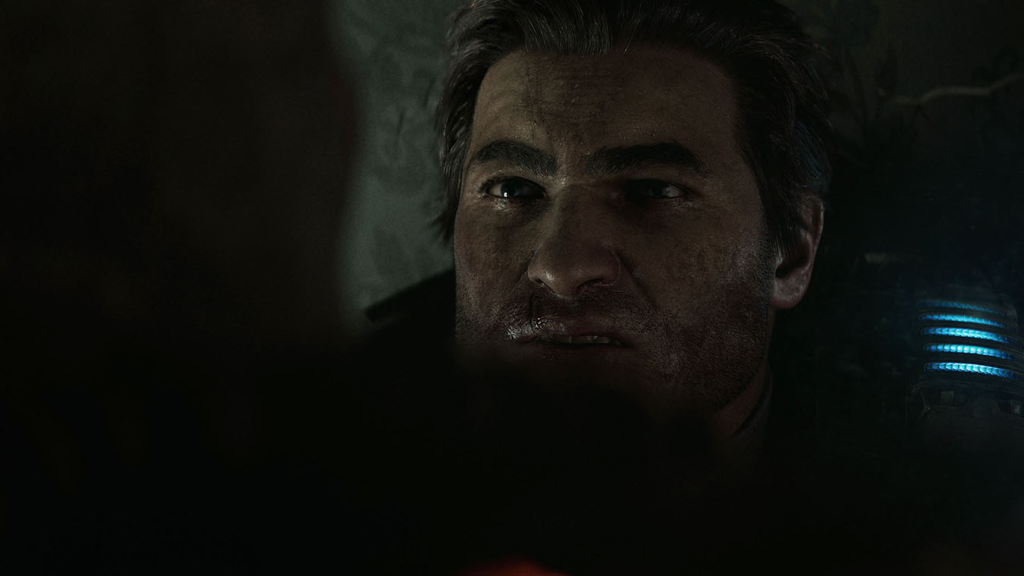
The game’s first major public impression has also been carefully curated. The reveal materials emphasize a bleak, reflective mood, including a musical callback that longtime fans will recognize as a nod to the franchise’s early marketing identity. The trailer presentation underscores isolation and vulnerability more than victory, signaling that E-Day wants to capture the dread and uncertainty of that first turning point rather than simply celebrating firepower. Even for viewers who aren’t steeped in Gears history, the intent is clear: this is a story about an opening shockwave, not a late-war routine.
On the technical side, E-Day is being built in Unreal Engine 5, and the studio has said the project is rebuilt from the ground up to take advantage of modern capabilities. That matters not only for visual fidelity, but also for how environments can be depicted and how character performances can carry more nuance—an important factor for a game that is openly prioritizing mood and emotion. The promise is that E-Day won’t just echo the past; it will use current tools to make that kind of experience more immersive and more believable.
What remains unknown, for now, is exactly when players will get their hands on it. No firm release date has been announced, and storefront listings have kept timing broad. Still, the direction is already coming into focus: a story-forward prequel, a concentrated setting, a renewed emphasis on tension, and a clear goal of making Gears feel like Gears again—starting at the day everything changed.
News written by Mike.