
LEGO Batman: Legacy of the Dark Knight is still months away from release, but its newly posted PC system requirements have already become a talking point across PC gaming communities. The specifications appearing on major storefront pages list a fairly demanding baseline for an all-ages LEGO title, prompting players to question whether the numbers reflect final targets or early, overly cautious estimates that will be refined before launch.
On the game’s PC storefront listing, the minimum requirements call for Windows 11, an Intel Core i5-9600K or AMD Ryzen 5 3600, 16GB of RAM, and a GPU in the class of an Nvidia GeForce RTX 2070 with 8GB of VRAM or an AMD Radeon RX 5700 XT with 8GB. The same listing also references Intel’s Arc A770 with 16GB of VRAM. Storage is set at 50GB, and an SSD is marked as required.
The recommended tier raises the bar further: Windows 11 remains the operating system target, while the CPU jumps to an Intel Core i7-12700K or AMD Ryzen 7 7700X. Memory rises to 32GB of RAM, and the recommended GPU targets an Nvidia GeForce RTX 3080 with 10GB of VRAM or an AMD Radeon RX 6800 XT with 16GB. Storage remains listed at 50GB, with an SSD still required.
The reason the requirements have sparked debate is less about disk space and more about the combination of Windows 11-only support, high RAM expectations, and relatively strong GPU targets. Many long-running LEGO games have historically been accessible on modest hardware, so fans were surprised to see specifications that look closer to contemporary big-budget action games than to the typical “family-friendly” performance profile associated with the brand.
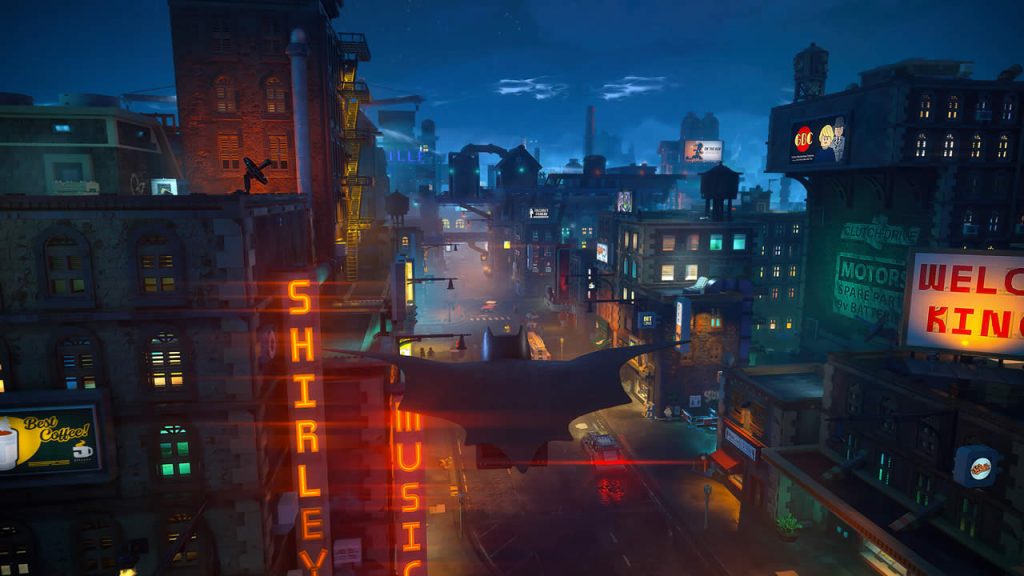
That said, there are practical reasons a studio might publish conservative targets early, especially for a large, modern open-world game. Official materials describe Legacy of the Dark Knight as a narrative-led action-adventure set in an open-world Gotham City, with a new combat system and a broad roster of iconic allies and villains. Open-world streaming, dense city scenes, and higher-fidelity lighting and effects can all push memory usage and GPU requirements upward, particularly before final optimization work is complete.
It is also important to note that at least one official channel has already signaled that the posted PC specs should not be treated as final. The official LEGO Batman: Legacy of the Dark Knight site includes a clear disclaimer that PC system requirements are subject to change. That single line matters because storefront requirements often evolve as games approach launch, especially once performance testing expands across a wider range of hardware and the team locks in final settings targets.
LEGO Batman: Legacy of the Dark Knight – Official Reveal Trailer
The reaction also reflects where the PC audience is today. According to Steam’s Hardware & Software Survey, 16GB of system memory remains the most common configuration among surveyed users, with 32GB close behind. A recommended 32GB target can therefore feel like a meaningful step up for a large portion of the player base, even if the game ultimately runs acceptably on 16GB with adjusted settings. In the same survey, Windows 11 is the dominant operating system among participants, which suggests the OS requirement will be less of a barrier for many players, though it still leaves out those who have not upgraded.
For now, the most responsible takeaway is to treat the posted requirements as a snapshot rather than a verdict. They provide a useful early signal about the performance class the publisher is preparing for, but the official “subject to change” disclaimer indicates adjustments remain possible. As launch gets closer, buyers should watch for updated requirements, clearer performance targets (such as resolution and frame-rate expectations), and any official clarification on what settings those specs are meant to represent.
Until then, prospective PC players who are concerned should avoid making rushed upgrade decisions based solely on an early storefront listing. If you already meet or exceed the minimum tier, there is a reasonable chance you will be able to play in some form, even if the final experience depends on settings, upscaling options, and post-launch patches. And if you are aiming for the recommended tier, the best strategy may simply be patience—because the final numbers, as the official materials emphasize, may not be the last word.
News written by Mike.