

As Resident Evil Requiem approaches release, Capcom is spotlighting an unexpected part of the game’s development: the internal debate over exactly how Leon S. Kennedy should look—and how much “older” should mean when you’re redesigning one of survival horror’s most recognizable faces.
In a recent media interview, director Koshi Nakanishi said the studio spent significant time polishing Leon’s new appearance, and credited particularly stringent feedback from women on the development staff. The team, he explained, has plenty of Leon fans inside the company, and that passion translated into unusually sharp review sessions. According to Nakanishi, reviewers “would point out and comment on even the finest details,” down to elements like the wrinkles on Leon’s neck. The result is a version of Leon that reads as more seasoned and world-weary—without losing the cool factor that made him a fan favorite in the first place.
That push for a refined, older look has also fed into the nickname that quickly caught on among Japanese fans: “ikeoji,” a term commonly used for an attractive middle-aged man. Online, the shorthand “hot uncle” became the easy translation, and it stuck—helping frame Leon’s new design as a deliberate evolution rather than a simple age-up. Nakanishi has said the goal wasn’t just to make Leon handsome, but to make him feel cool in his presence and personality as well. He’s also suggested players should watch for a more mature style of banter, including the kind of dry wit and subtle sarcasm that comes naturally with age and experience.
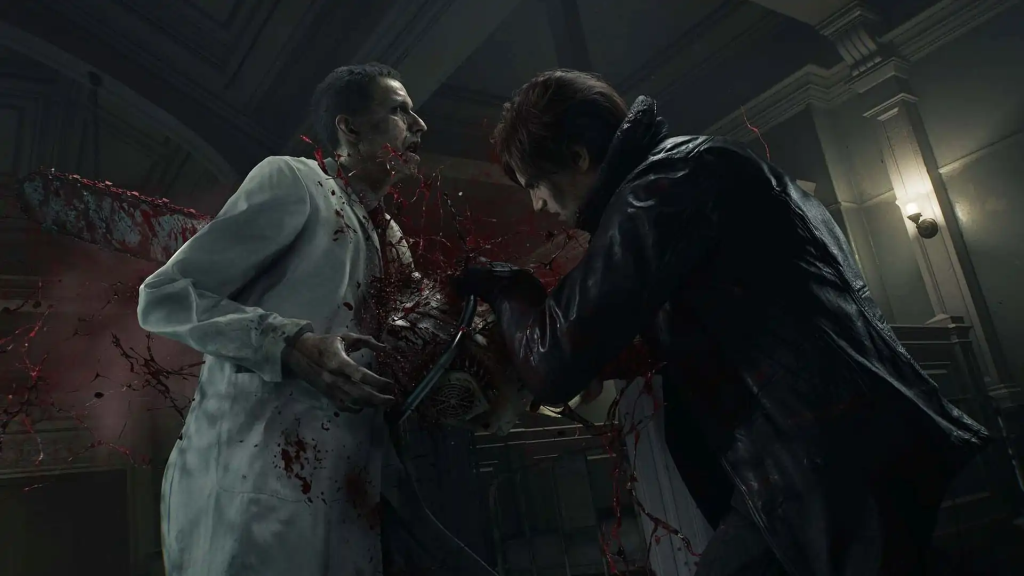
The timing is no coincidence. Capcom has positioned Requiem as the ninth mainline entry in the Resident Evil series and a key release in the franchise’s 30th anniversary window. The company has also pointed to the series’ long-running commercial power, saying Resident Evil has sold 174 million units worldwide as of June 30, 2025. That legacy puts extra pressure on a character like Leon, whose design changes are instantly noticed—and intensely judged.
Requiem’s story structure is built to share that spotlight. The game features two protagonists with distinct roles and pacing: Grace Ashcroft, an FBI analyst, and Leon, now described as a veteran agent. Their investigation centers on a string of mysterious deaths tied to a derelict hotel, and the narrative is designed to pull them toward each other as the case escalates. Capcom is also bringing back Raccoon City, reinforcing the sense that Requiem is meant to connect modern Resident Evil to the franchise’s foundational iconography.
Resident Evil 9 Requiem Game Trailer
Those dual leads aren’t just narrative flavor—they’re the backbone of the gameplay pitch. Grace’s segments are designed around classic survival-horror pressure: limited resources, careful movement through dangerous spaces, and a mindset where slipping past threats can be as important as fighting them. Leon’s sections, by contrast, emphasize more aggressive action and crowd control, leaning into his combat competence and experience. In the Japanese interview, Nakanishi also discussed why Leon now carries a tomahawk-style weapon, framing it as part of expressing a “harder” Leon—an older character who’s endured decades of brutal situations and carries that weight in both tone and animation.
The bigger industry context helps explain why Capcom is comfortable leaning into this split approach. Across the market, high-budget publishers are still chasing multiplayer and live-service scale, but single-player games remain critical for brand identity—especially for franchises built on atmosphere and pacing. Industry analysts estimate the global games market will generate roughly $189 billion in 2025, with billions of players spread across console, PC, and mobile. In that environment, big, premium releases have to justify their production values with clear differentiation. Requiem’s answer appears to be contrast: two playstyles, two emotional temperatures, and one iconic character redesigned with the kind of scrutiny usually reserved for movie-level casting.
Capcom has said Resident Evil Requiem launches February 27, 2026 on PlayStation 5, Xbox Series X|S, PC, and Nintendo Switch 2. Pre-orders include a bonus cosmetic for Grace called the “Apocalypse” costume, which changes her appearance only. Capcom has also highlighted that Requiem is built with RE ENGINE and has already earned strong pre-release recognition, including multiple awards at gamescom 2025—another signal that the publisher is treating this entry as a tentpole moment.
For fans, though, the most immediate takeaway may be simpler: Leon is back, he looks older, and Capcom is confident enough to say exactly why. In a franchise built on fine details—inventory choices, one extra bullet, one wrong turn—Requiem’s “hot uncle” conversation feels strangely on-brand: a reminder that sometimes the smallest adjustments are the ones players remember.
News written by Mike.